
"high altitude beans"
20000 article(s) found

A brief introduction to the cultivation of sweet and mellow boutique coffee beans, geographical location, climate and altitude
Alishan Mafeel coffee belongs to alpine coffee and belongs to the high-quality boutique coffee in Taiwan. It ranks first in Asia and eighth in the world. Coffee trees are mainly planted in southern Taiwan, such as Alishan in Chiayi County, Taiwan. because of its high altitude, Alishan is not only suitable for growing tea, but also more suitable for growing coffee. Belong to coffee

High altitude coffee expensive coffee Costa Rican geographical features, coffee flavor and production culture
Many people think that Costa Rican coffee beans are perfect and classic cups. Costa Rican beans are characterized by bright, clean, balanced and highly aromatic, providing a very consistent flavor. Costa Rica has more than 200 identifiable volcanic rocks dating back 65 million years. In the past few thousand years, volcanic eruptions have injected rich minerals into the soil and changed the soil.

Guatemala Ladisha | unique smoky flavor, high-altitude boutique coffee from Farahan Plateau
Guatemala Finca Las Deliclas La Tisa Manor 01 | brief introduction to the producing areas the Republic of Guatemala (Spanish: Repblica de Guatemala), translated from Taiwan as Guatemala, is a country in Central America located in the south of the North American continent. It borders the Pacific Ocean to the west, the Caribbean Sea to the east, Mexico to the north, Belize to the northeast, and east to the east.

The unique fruit named "Incht" in the tiny South Fruit Highland producing area of Guatemala, Incht Village.
. Arabica coffee grows at an altitude of about 2000 meters, while Robusta grows at an altitude of about 900m. If the altitude is too high, the coffee tree will frost because the temperature is too low, and even can not survive. On the other hand, Vivette Nanguo's coffee is not prone to frost even if it is planted at an altitude of nearly 2000 meters above sea level, and the high but not cold growing environment creates high-quality very hard beans.

An introduction to the Coffee Manor in the Coffee producing area of the Vivette Nan Fruit region in Guatemala in the Northwest Highlands
Vivette Nan Fruit is located in the highlands of northwestern Guatemala, growing at an altitude of 1800-2100 meters. It is the highest coffee-producing area in the country and is famous for producing high-quality beans. Because there are many rivers and lakes in Guatemala, the Vivette Nanguo region is rich in mountains and water resources, dry climate but abundant water resources, and complete water conservancy facilities in this area, so coffee is often washed and added.

What is the altitude above which coffee beans are planted?-Coffee bean planting conditions
Coffee beans are planted above sea level-coffee bean planting conditions the origin of coffee trees is Ethiopia in Africa. In botany, coffee trees belong to the evergreen trees of the subgenus Rubiaceae, and coffee beans, commonly known as coffee beans, are the seeds of the fruit of coffee trees, just because they are shaped like beans, so they are called coffee beans. Climate is the decisive factor in coffee cultivation.

High altitude boutique coffee beans Costa Rican quality coffee beans
Quality editor S.H.B. It is a very hard bean with an altitude of more than 1500 meters above sea level, which means high quality Costa Rican coffee. This extra-hard coffee bean suitable for medium and heavy roasting has a strong sour taste and charming aroma. Costa Rican SHG coffee is usually full-grained, the flavor is clear, the acidity is bright, and the consistency is ideal. The strong flavor makes the tail rhyme long in the throat.

Why is the coffee at high altitude so sour?
Why is the coffee at high altitude so sour? No matter what kind of coffee, freshness is an important factor affecting the quality. When choosing and buying, grab one or two mocha mocha (5) coffee beans in your mouth, if crisp and sound, it means that the coffee beans are not damp, and the coffee beans with fragrant lips and teeth are the top grade, but it is best to squeeze them with your hands to feel whether they are solid or not. never buy short.

A brief introduction to the planting situation, geographical location, climate and altitude of mellow and full-bodied coffee beans
Alishan Mafeel is planted in the Alishan Mountains, and the Alishan Mountains are uniquely located in the global coffee belt. Because of the high altitude and the temperature difference of more than 10 degrees between day and night, the coffee beans produced are of the best quality, with full grains, thick pulp, sweet and mellow taste, sweet, non-astringent, not bitter, not sour, and perfectly showing the taste of coffee.

The effect of altitude on Coffee Flavor
The influence of geographical location on the flavor of coffee beans is profound. All coffee grows in the tropics, and the altitude at which it grows has a profound effect on the taste of coffee. The tropical belt extends from 30 degrees north latitude to the equatorial regions of the southern mountains that produce the world's truly high-quality Arabica coffee. Central and South America, South Asia and some Pacific islands, south-central Africa is also the most important in the world.

Flavor description of Costa Rican coffee beans introduction to the taste of the grinding scale manor area
High-quality Costa Rican coffee is called extra hard beans, and this kind of coffee can grow at an altitude of more than 1500 meters. Altitude has always been a problem for coffee growers. The higher the altitude, the better the coffee beans, not only because the higher altitude can increase the acidity of the coffee beans and thus increase the flavor, but also because the night temperature at the higher altitude is lower, which makes the trees grow slowly.
Why should coffee beans be graded on the basis of altitude? what is the effect on coffee flavor?
Why grade coffee beans on the basis of elevation? First of all, we should realize that the influence of geographical location on the flavor of coffee beans is profound. All coffee grows in the tropics. In fact, altitude has no direct effect on coffee. However, altitude can affect the growth, development and quality of coffee through the redistribution of meteorological elements (temperature, light, heat, wind speed, rainfall, etc.).

What is the altitude of Colombian coffee? what is the high altitude flavor of Colombian coffee bean producing areas?
Professional coffee knowledge exchange more coffee bean information please follow the coffee workshop (Wechat official account cafe_style) the front street Columbia Coffee Cauca introduces that Colombia is the world's third largest coffee exporter, mainly produces Arabica coffee, is also the largest exporter of Arabica beans. In 1808, a priest first introduced coffee from the French Antilles via Venezuela.
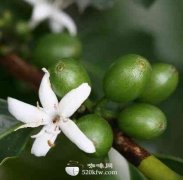
Coffee knowledge altitude affects the flavor of coffee beans
It is generally foggy in alpine areas, and sunlight is affected by fog beads, which enhances part of the visible light, thus enhancing the effect of photosynthesis. for the second reason, the forest in the alpine area is luxuriant. under the premise of temperature, rainfall, topography and soil, coffee trees especially like the microclimate characteristics of frequent fog and large temperature difference between day and night. If an area is not high above sea level

A brief introduction to the planting situation, geographical location, climate and altitude of Mai boutique coffee beans with the most unique flavor.
Alishan Mafeel coffee belongs to alpine coffee and belongs to the high-quality boutique coffee in Taiwan. It ranks first in Asia and eighth in the world. Coffee trees are mainly planted in southern Taiwan, such as Alishan in Chiayi County, Taiwan. because of its high altitude, Alishan is not only suitable for growing tea, but also more suitable for growing coffee. Belong to coffee

Introduction of taste grinding scale of Costa Rican coffee bean flavor description method
S.H.B. It is a very hard bean with an altitude of more than 1500 meters above sea level, which means high quality Costa Rican coffee. Altitude has always been a problem for coffee growers. The higher the altitude, the better the coffee beans, not only because the higher altitude can increase the acidity of the coffee beans and thus increase the flavor, but also because the night temperature at the higher altitude is lower, which can make the trees grow slowly.

Why High Altitude Coffee Beans Are Good-High Quality Coffee Beans
Why High Altitude Coffee Beans Are Good-High quality coffee beans CATURRA was originally discovered in Brazil and is also the result of hybridization with BORBON. Its plant is short, plant distance is more compact, so there are more shade, forming a good windbreak effect, so that its flowers are less likely to be blown down by the wind, and bear more fruits. Caturra tastes like Borbon.
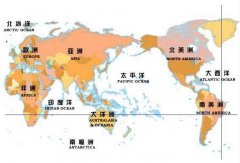
Grow high-quality Bolivian coffee beans at high altitude
In the past, coffee trees in Bolivia used to act as hedges and ornaments around the garden. Real commercial production began in the early 1950s. The coffee industry in Brazil was badly damaged by the great frost in 1957, while Bolivia (Bolivia) benefited and developed rapidly. Bolivian coffee is grown at an altitude of 180,670 meters above sea level, including Allah.

The higher the coffee poster is, the better the quality is, and the lower the altitude is, the worse it is? Altitude is the determining factor?
Professional coffee knowledge exchange more information about coffee beans Please follow the coffee workshop (official Wechat account cafe_style) when latitude decreases just as altitude affects temperature, latitude also has the same problem. Take Colombia, for example, which is famous for its high-quality, high-altitude coffee beans. Coffee-growing farm areas, such as Narino Manor, are 100 feet from the equator

El Salvador coffee-producing countries in high-altitude growing areas introduce the treatment of high-quality coffee beans.
El Salvador boutique coffee is concentrated in the volcanic rock producing areas of Santa Ana in the west and Charantanan fruit in the northwest. In recent years, the top 10 cup tests are almost entirely from these two producing areas, with an altitude of about 9-1500 meters, mainly bourbon (68%). Followed by Pacas (29%), mixed-race Pakamara, Dulaai and Kaddura accounted for only 3%. The coffee harvest season has been held since November.